
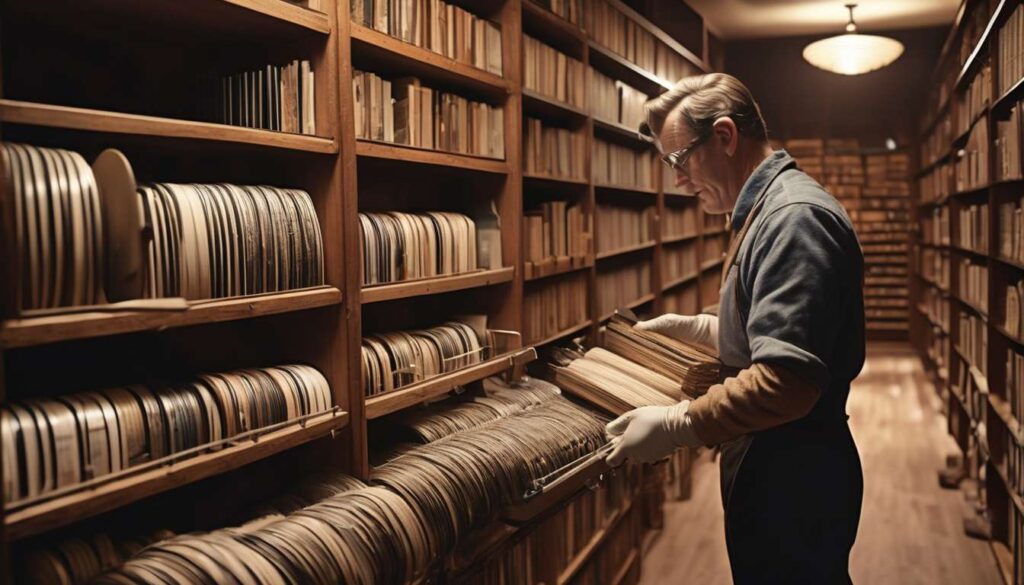
Unapologetically, we assert that preserving adult movie publishing history is essential to understanding our cultural fabric.
We contend that these materials—magazines, catalogs, posters, and independent zines—are not merely titillation but artifacts that reveal shifting norms about sexuality, censorship, technology, and labor.
As archivists, scholars, and curious citizens, we gather and contextualize ephemera that mainstream institutions often ignore, piecing together narratives about freedom of expression, marginalized creators, and the market forces that shaped distribution.
By documenting production credits, distribution networks, legal battles, and fan communities, we expose intersections with gender, race, and class often elided in sanitized histories.
Our work resists moralistic erasure and illuminates how erotic media influenced broader aesthetics, business models, and regulatory frameworks.
In preserving these materials, we enable rigorous research, teach nuanced media literacy, and ensure that a candid account of cultural evolution includes those works society once relegated to the shadows.
Historical Significance
We recognize that preserving adult film archives captures crucial milestones in media, law, and social attitudes that shaped modern publishing and cultural discourse.
Cultural archives preserving adult movie publishing history are a shared project.
- They help trace how communities negotiated censorship, creative freedom, and commerce.
- They record legal battles, distribution networks, and evolving aesthetics that influenced mainstream publishing.
By keeping these materials accessible, we strengthen our collective memory.
- Researchers, creators, and community members gain a trustworthy base for study and dialogue.
Archives document marginalized voices and contested narratives.
- These records let us learn from past struggles and successes.
Together, we can use this history to inform better policies, ethical standards, and inclusive practices in contemporary media.
This historical perspective connects us to a continuum of makers and audiences.
- Understanding origins helps shape a more equitable future for publishing and cultural expression.
Archival Materials
We collect and preserve diverse archival materials—film reels, distribution records, promotional ephemera, legal filings, and personal papers—to document how adult movie publishing developed and affected wider cultural practices.
We gather catalogs, trade magazines, censorship correspondence, theater programs, and fan letters so community members can trace networks of creators, distributors, and audiences.
We include photographs, cover art, and packaging to show changing aesthetics and marketing strategies, and we accession oral histories and producer notes to capture intentions and labor behind publications.
As cultural archives preserving adult movie publishing history, we prioritize materials that reveal economic models, regulatory pressures, and grassroots responses, making space for complicated stories without judgment.
We organize collections to support researchers, educators, and community members who seek connection and context, and we provide transparent finding aids so everyone can see what’s held and why.
By treating these items as part of shared cultural heritage, we strengthen a sense of belonging and invite responsible, informed engagement with a contested but important segment of publishing history.
Preservation Methods
We employ a range of conservation, digitization, and storage practices to ensure fragile films, paper records, audiovisual media, and born-digital files remain accessible and authentic for future research.
Physical stabilization and conservation
- We stabilize physical items with climate-controlled housing, acid-free sleeves, and gentle cleaning.
- We repair splices and brittle paper conservatively so provenance stays intact.
Audiovisual preservation
- For audiovisual reels and tapes, we prioritize lossless transfers.
- We create preservation masters and access copies while documenting technical metadata.
Born-digital care
- We follow rigorous file-format and checksum routines for born-digital materials.
- We refresh storage media and migrate formats before obsolescence threatens access.
Collaborative workflows and documentation
- Our workflows are collaborative: volunteers, researchers, and community members help identify items and validate contextual notes.
- We maintain catalog records that link items to stories and creators.
Access and stewardship
- We provide welcoming reading rooms and secure online portals so people can engage with the collection.
- By combining practical conservation, thoughtful digitization, and inclusive stewardship, we keep cultural archives preserving adult movie publishing history usable, truthful, and meaningful for everyone who seeks connection.
Legal and Ethical Contexts
We must navigate a complex legal and ethical landscape that balances creators’ rights, consent and privacy concerns, and public interest when collecting, preserving, and providing access to adult movie publishing materials.
As cultural archivists, we commit to policies that respect performers’ consent, copyright, and dignity while recognizing the value of historical documentation.
Cultural archives preserving adult movie publishing history require clear provenance, rights verification, and procedures for restricted access where privacy or contractual limits apply.
We include stakeholders—performers, producers, researchers, and community members—in policy development so everyone feels seen and safe.
We adopt takedown procedures and anonymization options when requested, and we document our decisions transparently to build trust.
We comply with laws across jurisdictions and advocate for fair use interpretations that support responsible scholarship.
By centering consent and communal accountability, we ensure cultural archives preserving adult movie publishing history serve both collective memory and individual rights without marginalizing contributors.
Key practices and procedures:
-
Provenance and rights verification
- Establish clear chain-of-custody and source documentation for materials.
- Verify copyright status and licensing terms before accessioning or publishing.
- Record any contractual restrictions or performer agreements.
-
Consent, privacy, and dignity
- Seek documented consent from performers where feasible, especially for sensitive materials.
- Offer anonymization or access restrictions when consent is absent or privacy concerns exist.
- Avoid exploitative presentation; use contextualizing metadata and explanatory notes.
-
Access and restrictions
- Implement tiered access (open, restricted, closed) based on legal, ethical, or contractual limits.
- Require researcher credentials or IRB-like approvals for sensitive collections.
- Maintain secure storage and controlled digital access logs.
-
Stakeholder engagement and accountability
- Include affected communities in policy drafting and review.
- Publish governance policies, decision rationales, and appeals procedures.
- Establish a mechanism for regular policy reassessment with stakeholder input.
-
Takedown and remediation
- Maintain a clear, accessible takedown request process.
- Provide remediation options: anonymize, restrict, or remove materials as appropriate.
- Document takedown decisions and communications to ensure transparency.
-
Legal compliance and advocacy
- Monitor and comply with relevant laws in applicable jurisdictions (privacy, obscenity, labor, copyright).
- Consult legal counsel for complex or cross-border issues.
- Advocate for scholarly exceptions and fair use where they support responsible research.
Outcome:
By implementing these practices—centered on consent, provenance, stakeholder participation, transparency, and legal diligence—archives can responsibly preserve adult movie publishing history while safeguarding performers’ rights, privacy, and dignity.
Research Applications
We can support multidisciplinary research — from media studies and labor history to public health and law — by providing well-documented, ethically curated collections and controlled access to adult movie publishing materials.
We embrace researchers as collaborators and offer:
- catalogs,
- provenance data,
- contextual documentation
so scholars can trace production practices, distribution networks, and economic models.
Cultural archives preserving adult movie publishing history let us examine workplace conditions, consent frameworks, technological change, and policy impacts with rigor rather than rumor.
We’ll facilitate reproducible studies by maintaining:
- standardized metadata,
- digitized copies when allowed,
- clear access protocols that protect contributors.
We encourage cross-institutional partnerships and community-based research agreements so subjects and creators feel respected and included.
Our collections support multiple research methods, including:
- quantitative analysis,
- oral histories,
- comparative legal research
to provide evidence for advocacy and policy reform.
By centering ethical stewardship we build trust, create reliable scholarship, and ensure that this often-marginalized sector is studied with the seriousness and care it deserves.
Cultural Representation
We explore how adult film collections shape cultural narratives, challenge stereotypes, and reveal diverse identities and practices often erased from mainstream histories.
Cultural archives preserving adult movie publishing history are vital records that center creators, performers, and audiences who’ve been marginalized.
By documenting production notes, distribution patterns, and promotional art, archives trace how representations of gender, sexuality, race, and consent evolved and intersected with social movements.
We acknowledge harm and bias in older materials while highlighting counter-narratives that offered community, experimentation, and visibility.
In doing so, we create a shared space where people who seek belonging can find reflection and validation in historical context.
We value nuance: archives don’t sanitize, they contextualize, enabling critical engagement rather than voyeurism.
We commit to collaborative stewardship that respects contributor dignity and community needs.
Cultural archives preserving adult movie publishing history thus become tools for:
- empathy,
- scholarship,
- cultural reckoning.
These collections show how intimate media both mirrored and influenced broader struggles for recognition and rights.
Public Access Strategies
We will develop clear access policies, layered access controls, and outreach programs that balance transparency with privacy and consent.
We will prioritize cultural archives preserving adult movie publishing history as shared resources, designing user tiers that let scholars access contextual materials while protecting personal data and respecting performers’ rights.
Access mechanisms and safeguards:
- User tiers that differentiate scholarly, educational, and general public access.
- Straightforward request processes for restricted materials.
- Anonymized metadata where needed to protect identities.
- On-site reading rooms for handling sensitive items under supervised conditions.
Community engagement and governance:
- Workshops and listening sessions so community members shape what’s available and how it’s described.
- Inclusive stewardship practices that reinforce that everyone tied to these cultural records has a voice.
Legal and ethical frameworks:
- Partnerships with legal advisors and advocacy groups to draft usage agreements that prevent exploitation and encourage ethical scholarship.
- Consent standards embedded in accession and access procedures.
Public-facing interpretation and outreach:
- Digital exhibitions and curated portals to highlight narratives and provide educational framing.
- Presentation goals that make materials approachable without sensationalizing them.
Evaluation and accountability:
- Measure success through usage metrics, community feedback, and adherence to consent standards.
- Iterate policies regularly to remain accountable, equitable, and responsive to the communities tied to these cultural records.
Future Challenges
We’ll need to anticipate technological, legal, and social changes that could complicate preservation, access, and ethical stewardship of adult movie publishing history.
Formats, platforms, and rights frameworks will keep shifting, so plan adaptable workflows and migration strategies to keep cultural archives usable and secure.
We’ll face takedown requests, age-verification laws, and censorship that pressure access; develop clear policies balancing legal compliance with scholarly openness.
We’ll confront ethical concerns about consent, representation, and community impact.
- Engage creators, performers, researchers, and affected communities in governance so stewardship feels communal rather than imposed.
- Create consent and rights documentation practices that are transparent and revisitable.
- Establish review processes for sensitive materials with community input.
Funding uncertainty and institutional bias can marginalize these collections; advocate, diversify support, and build alliances.
- Seek mixed funding (grants, donations, partnerships) to reduce dependence on a single source.
- Partner with academic departments, advocacy groups, and other cultural institutions to normalize preservation work.
Invest in robust metadata, provenance documentation, and distributed backups to withstand obsolescence and attacks.
- Adopt and share metadata standards tailored to the collection’s needs.
- Record provenance and rights statements consistently.
- Deploy geographically distributed backups and integrity checks.
Share standards and provide training so cultural archives preserving adult movie publishing history remain resilient, respected, and reflective of the communities they document.
- Develop and publish best-practice guidelines (technical, legal, ethical).
- Offer regular training for staff and community stakeholders.
- Create mechanisms for ongoing community feedback and policy revision.
How do collectors and former industry workers contribute personal items or stories to archives, and what steps should they take to ensure their contributions are accepted and preserved?
We recognize the Current Question and welcome contributions warmly.
We collect items and oral histories by:
- contacting archives,
- discussing provenance,
- prepping clear descriptions.
We document ownership and permissions by:
- documenting ownership,
- signing donation or loan agreements,
- providing digitization permissions.
We manage and interpret materials by:
- labeling items,
- sharing context,
- offering interviews or contacts.
We ensure proper handling and follow guidelines on:
- format,
- condition,
- rights.
We keep communication open so contributions are properly accessioned and cared for.
Are there specialized training programs or career paths for archivists who focus on adult film materials, and what skills are most in-demand in this subfield?
Short answer: There are no widely separate academic degrees solely for archivists of adult film materials, but there are clear specialized pathways and professional practices you can pursue.
Educational foundations
- Archival science or library science degrees provide core skills in arrangement, description, preservation, and access.
- Film studies and media studies teach film history, formats, context, and appraisal for moving-image materials.
- Digital preservation and digital curation courses address digitization workflows, file formats, checksums, and long-term storage.
- LGBTQ, gender, and sexuality studies give critical context and community-aware perspectives important for many adult film collections.
Practical, niche training
- Internships and fellowships created specifically around adult film or erotica collections give hands-on experience with appraisal, handling, and cataloging of these materials.
- Workshops and short courses on topics such as sensitive-material description, privacy-aware access, or fetish/genre-specific cataloging build practical competence.
- Professional networks and communities of practice (within archives, film preservation, and queer cultural heritage circles) are essential for mentorship, standards development, and resource sharing.
Core skills and competencies
- Cataloging and metadata — applying controlled vocabularies, inclusive subject headings, and structured descriptive practice while avoiding stigmatizing language.
- Copyright and rights management — assessing permissions, orphan works risk, and fair-use considerations specific to commercial and amateur adult content.
- Privacy and legal considerations — protecting the identities and rights of performers, subjects, and donors; understanding local obscenity and privacy laws.
- Digitization and technical preservation — handling various analog formats (VHS, film, etc.), creating preservation masters, and managing access copies.
- Ethical stewardship and trauma-aware practice — centering consent, minimizing re-traumatization, and recognizing power dynamics with communities represented.
- Community engagement and outreach — collaborating with performers, producers, and communities to inform acquisition, description, and access policies.
Professional and ethical priorities
- Privacy and confidentiality should be embedded in intake, access, and publication workflows.
- Nonjudgmental, inclusive description avoids moralizing language and respects the subjects and communities represented.
- Risk-aware access policies balance preservation and research value with potential harms to individuals.
- Continual policy review is important because laws, norms, and community expectations change.
Practical next steps if you’re developing this specialization
- Assemble a curriculum that combines archival/library science, film/media preservation, legal training, and community studies.
- Design internships and paid practicum with clear competency goals (metadata, digitization, ethical intake).
- Create guidelines and best practices for description, access, and privacy tailored to adult film materials.
- Build partnerships with community organizations, performers’ groups, and legal experts.
- Develop a mentorship/network program to support new archivists entering the niche.
If you want, I can draft a sample internship syllabus, a checklist of intake/access policies for adult film collections, or suggested coursework mapped to competencies. Which would be most helpful?
How do archives handle multimedia born-digital content from adult platforms (streaming sites, subscription services) compared with older physical media, and what technologies are used for authenticity and integrity checks?
We handle born-digital adult content differently than older tapes and discs.
Ingestion and capture:
- We ingest streamed and subscription files via controlled captures.
- We perform metadata harvesting to record contextual information.
- We store files in secure storage and apply cleaning and format normalization to ensure long-term usability.
Authenticity and integrity:
- We use checksums and digital signatures.
- We run fixity monitoring to detect corruption over time.
- We apply blockchain-backed timestamps for additional tamper-evidence.
Provenance, access, and ethics:
- We document provenance and access restrictions.
- We record ethical guidelines and conditions of use so contributors and users are treated with respect.
- We maintain policies to preserve sensitive cultural materials while protecting privacy and legal rights.
Conclusion
You’ve seen how cultural archives preserve adult movie publishing history and why it matters: they safeguard primary materials, document social change, and support rigorous research while navigating legal and ethical challenges.
By preserving diverse voices and enabling public access, archives let you contextualize a stigmatized industry within broader cultural narratives.
As technologies and norms evolve, you’ll rely on ethical stewardship, collaboration, and adaptable preservation strategies to ensure this history remains available, accurate, and responsibly shared.